
How to Prepare IT Equipment for Shipping: A Business Checklist
October 15, 2026
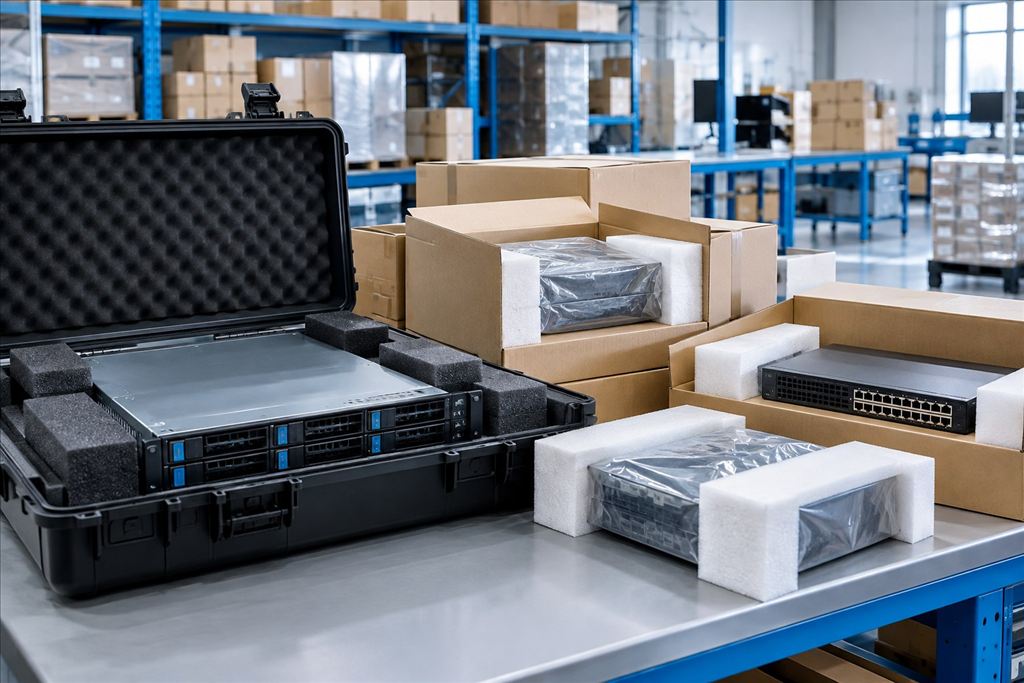
Before shipping IT equipment, document the items, record their condition, confirm packaging suitable for transport, disclose any batteries and measure the finished packages. Agree the delivery and receiving arrangements before dispatch. A clear inventory and handling plan help the logistics team assess the shipment without relying on a vague description such as “computer equipment.”
Create an inventory the receiver can use
List the equipment type, make, model, quantity and serial or asset reference where appropriate. Record accessories separately so the receiver can check that the expected cables, adapters and mounting parts have arrived. Keep a copy of the list with your shipment records.
For business planning, assign someone at each end to confirm the inventory and receiving arrangements. If equipment contains business data, follow your organisation’s own backup and access procedures before handing it over. A logistics booking is not a substitute for your IT handover process.
Record condition and review packaging
Photograph the equipment and packaging before dispatch. Note existing marks, loose parts or damage so the receiving team has a useful reference. Confirm whether the equipment is new, used, a repair return or a replacement unit.
Inspect any original packaging rather than assuming a retail carton is ready for transport. Protect equipment from movement and contact with other items, and discuss whether stronger outer packaging, fitted cushioning or a crate is needed. FedEx’s computer-shipping guide describes original packaging, cushioning and double-boxing options. Select the approach appropriate to the actual equipment and transport service.
Disclose batteries before confirming transport
Tell the logistics team if equipment contains batteries, if batteries are packed alongside it, or if spare batteries are included. Share the manufacturer’s battery details when requested. Battery type, configuration and condition can affect acceptance and preparation requirements.
Do not assume a device is acceptable simply because its battery is installed. Ask for a shipment-specific review against current carrier and route requirements before booking. FedEx’s lithium-battery guidance explains that packing and marking requirements can apply to batteries contained in or packed with equipment.
Measure the finished load and arrange the handover
- Record the number of cartons, crates or pallets.
- Measure each finished package and record its packed weight.
- Confirm collection access, receiving hours and the delivery contact.
- Discuss whether unloading equipment or special site access is needed.
- Keep the inventory, shipment documents and handover references together.
If a supplier changes the packaging, send the revised dimensions before accepting a final quote. For a project with several suppliers, identify which cartons belong to each order and whether any equipment must travel urgently instead of waiting for consolidation.
Frequently asked questions
Can I reuse the original equipment box?
Possibly, if its condition and protective fit remain suitable. Ask for a review of the box, cushioning and outer protection rather than treating original packaging as an automatic guarantee.
Should cables and accessories travel loose in the same box?
Keep accessories organised and secured so they cannot move against the equipment. Label them against the inventory and agree a packaging approach suited to the items.
Can laptops or other battery-powered devices be shipped?
Acceptance depends on the device, battery and chosen transport service. Disclose the battery details and obtain confirmation of applicable requirements before dispatch.
Does a fragile label replace protective packaging?
No. A label communicates a handling request; it does not stop an item moving inside its package. Packaging and cargo preparation still need to be suitable for the journey.
Discuss your equipment shipment
Explore US2Asia logistics services and prepare the details in our shipping quote checklist. Then send your equipment inventory and shipment requirements for discussion. Route availability and handling arrangements are confirmed for each enquiry.